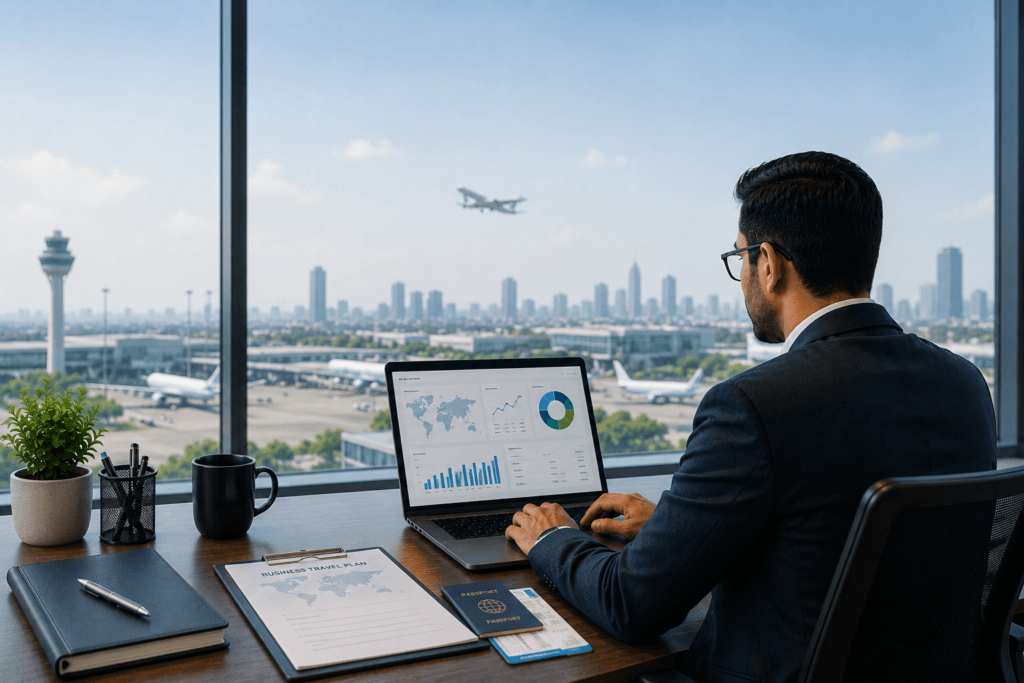


Business travel is an important part of modern business operations. Companies regularly send employees to meet clients, attend conferences, participate in meetings, visit offices, conduct training programs, develop partnerships and represent their organizations at corporate events. While these trips can support business growth, unmanaged travel can also become a significant expense.
The total cost of business travel extends beyond airfare. Hotel accommodation, airport transfers, local transportation, cancellation charges, last-minute bookings and administrative time can all increase the overall expense. Without a structured process, companies may also have limited visibility into where their travel budget is being spent.
This is where corporate travel management can make a measurable difference. A professionally managed travel program can help businesses organize travel more efficiently, improve policy compliance, control avoidable expenses and make better decisions based on travel data.
What Is Corporate Travel Management?
Corporate travel management is the systematic planning, booking, coordination and monitoring of business-related travel. It can include airline reservations, hotel accommodation, airport transfers, ground transportation, travel policies, traveler support, reporting and expense management.
Instead of allowing employees or departments to make travel arrangements independently, businesses can establish a centralized process. This gives organizations greater control over travel spending while making the booking experience more consistent for employees.
A well-designed corporate travel program should balance several priorities, including:
- Cost efficiency
- Traveler convenience
- Business requirements
- Policy compliance
- Safety and risk management
- Booking flexibility
- Accurate reporting
The objective is therefore not simply to find the lowest available fare. It is to create a travel process that delivers appropriate value while controlling unnecessary expenditure.
Why Business Travel Costs Can Increase Without Proper Management
Business travel expenses can become difficult to control when bookings are made without consistent policies or centralized oversight.
Some common causes of unnecessary travel expenditure include:
- Last-minute flight reservations
- Expensive hotel selections
- Inconsistent booking practices
- Unused or poorly managed reservations
- Frequent itinerary changes
- Avoidable cancellation fees
- Unplanned airport transportation
- Lack of preferred suppliers
- Limited visibility into travel expenditure
- Excessive administrative work
For companies with frequent domestic or international travel, even relatively small inefficiencies can become significant when multiplied across hundreds of trips.
A structured approach allows businesses to identify these inefficiencies and establish processes to reduce avoidable costs.
One of the most effective ways to manage business travel expenditure is to centralize travel arrangements.
1. Centralized Booking Improves Cost Control
When employees use a consistent booking process, companies can obtain better visibility into flight, hotel and transportation spending. It also becomes easier to implement company travel policies and monitor whether employees are using approved options.
A centralized system can help businesses establish guidelines for:
- Preferred airlines
- Hotel categories
- Travel classes
- Advance booking periods
- Accommodation budgets
- Ground transportation
- Cancellation procedures
- Approval requirements
Centralization does not mean removing flexibility from employees. Instead, it creates a framework within which employees can make appropriate travel choices while the company maintains financial control.
2. Advance Flight Planning Can Reduce Airfare Expenses
Airfare can represent a substantial portion of a business trip’s total cost. Booking decisions therefore have a direct impact on the corporate travel budget.
When travel schedules are known in advance, companies can evaluate suitable flight options before prices increase closer to departure. A structured booking process also reduces dependence on expensive last-minute reservations.
However, businesses should not automatically choose the cheapest available ticket.
A low-priced fare may have restrictive change or cancellation conditions, inconvenient timings or additional charges. An apparently inexpensive ticket can therefore become more expensive if the itinerary changes.
The better approach is to evaluate the total travel value, considering price, schedule, flexibility, baggage requirements and business priorities.
3. Preferred Hotel Rates Can Lower Accommodation Costs
Hotel accommodation is another important component of business travel expenditure.
Companies with regular travel requirements can establish preferred hotel options based on destination, location, quality and budget. A preferred accommodation strategy can make hotel spending more predictable and reduce unnecessary premium bookings.
Location is also important.
For example, selecting accommodation close to a conference venue, client office or meeting location can reduce local transportation requirements. It can also save employee time, which is an important indirect benefit of effective travel planning.
Businesses should therefore evaluate hotels based on both room rates and the overall cost and convenience of the trip.
4. A Corporate Travel Policy Helps Prevent Unnecessary Spending
A corporate travel policy provides employees with clear guidelines for planning business trips.
Without a defined policy, employees may independently select flights, hotels and transportation according to personal preferences. This can result in inconsistent spending and make it difficult for management to understand or control travel costs.
A practical policy can cover:
- Who can approve business travel
- When flights should ideally be booked
- Which travel classes are permitted
- Accommodation limits
- Preferred suppliers
- Ground transportation procedures
- Cancellation and modification rules
- Expense documentation
- Emergency travel procedures
The policy should be easy to understand and realistic. If the process is unnecessarily complicated, employees may find alternative ways to arrange their travel.
5. Travel Data Helps Businesses Identify Savings Opportunities
Companies cannot effectively control travel expenditure without understanding their spending patterns.
Travel reporting can help management identify frequently used routes, destinations, airlines, hotels and booking patterns. This information can reveal areas where the organization may be able to reduce unnecessary expenditure.
For example, travel data might show that:
- Employees frequently book flights shortly before departure.
- Multiple departments use different hotels in the same destination.
- Certain routes generate high travel expenditure.
- Cancellation and modification charges are occurring regularly.
- Employees are not consistently using preferred suppliers.
Once these patterns are identified, businesses can take targeted corrective action.
Expocity Travels states that it uses comprehensive post-trip reporting and industry insights to help clients measure and improve their corporate travel initiatives. The company also highlights data-driven solutions and automation as part of its approach to efficient travel management.
6. Automation Can Reduce Administrative Costs
Travel management involves more than making reservations. Employees or administrative teams may spend considerable time comparing options, coordinating bookings, managing itinerary changes and maintaining travel records.
Technology and automation can simplify many of these processes.
A technology-enabled travel program can provide better access to travel information, improve visibility and reduce repetitive administrative tasks. This can help employees spend less time arranging travel and more time on their core responsibilities.
Expocity Travels describes its approach as using advanced data-driven solutions, tools and automation, including traveler tracking and real-time risk alerts.
The financial benefit of automation can therefore extend beyond direct booking costs by reducing administrative effort.
7. Efficient Airport Transfers Can Reduce Transportation Expenses
Ground transportation is sometimes overlooked when businesses calculate travel expenditure.
A poorly planned airport transfer can result in unnecessary taxi expenses, waiting time or multiple individual vehicles for employees travelling to the same destination.
Advance coordination can help businesses organize airport transfers according to flight schedules, meeting locations and traveler requirements.
This is especially useful when several employees are travelling together for a conference, meeting or corporate event.
Coordinated transportation can improve operational efficiency while providing employees with a more convenient travel experience.
8. Better Itinerary Planning Reduces Change and Cancellation Costs
Business schedules can change. Meetings may be postponed, conferences may be rescheduled and employees may need to modify their travel plans.
Some changes are unavoidable, but poor planning can increase the financial impact of those changes.
Businesses can reduce avoidable costs by:
- Confirming travel requirements before booking.
- Selecting suitable flexible fares when business circumstances require flexibility.
- Establishing clear approval procedures.
- Tracking upcoming trips.
- Monitoring cancellations and modifications.
- Reviewing recurring causes of itinerary changes.
This allows companies to balance cost savings with the flexibility required for real-world business travel.
9. Supplier Management Can Improve Overall Travel Value
Working with multiple airlines, hotels and transportation providers without a coordinated strategy can make travel expenditure difficult to monitor.
A structured supplier strategy allows businesses to evaluate providers based on price, service quality, availability, flexibility and business requirements.
Companies can identify frequently used routes and destinations and then assess whether preferred supplier arrangements would be appropriate.
Expocity Travels states that its international affiliations and extensive network help provide competitive industry costs, while its website also highlights a transparent fee structure.
Supplier management should therefore focus not only on discounts but also on reliability, service quality and the total value delivered to the organization.
10. Risk Management Helps Prevent Unexpected Travel Costs
Cost efficiency should never come at the expense of traveler safety.
Unexpected disruptions, emergencies or security concerns can create additional expenses and operational challenges for organizations. Businesses therefore need a travel strategy that considers both financial efficiency and traveler risk.
Expocity Travels identifies risk management as one of its key capabilities and states that employee safety and company and traveler data are priorities. Its website also highlights traveler tracking and real-time risk alerts.
Effective travel risk management can help businesses respond more efficiently when unexpected situations affect employees during business trips.
11. Integrated Travel Management Can Improve Corporate Event Planning
Business travel frequently overlaps with meetings, conferences, incentives and corporate events.
When flights, accommodation, transfers and event logistics are arranged independently, companies may face duplicated work and coordination challenges.
An integrated approach can bring these requirements together.
Expocity Travels states that it provides corporate travel, MICE, destination management and event management services. The company also describes its corporate solutions as customized and industry-specific, supported by an experienced team handling corporate travel management, destination management, events and MICE travel.
For businesses organizing group travel or corporate events, coordinated travel planning can help improve both operational efficiency and budget visibility.
How Businesses Can Build a Cost-Efficient Travel Program
A successful corporate travel program requires more than simply outsourcing bookings. Businesses should create a structured process that can be measured and improved over time.
Step 1: Review Existing Travel Expenditure
Start by analysing airfare, hotel costs, transportation, cancellation charges and other business travel expenses.
Step 2: Identify Frequent Travel Patterns
Determine which destinations, routes, suppliers and departments account for the highest travel expenditure.
Step 3: Establish a Practical Travel Policy
Create clear guidelines for booking, approvals, accommodation, transportation and expense management.
Step 4: Centralize Travel Arrangements
Use a consistent process for business travel bookings so that expenditure can be monitored more effectively.
Step 5: Introduce Technology and Reporting
Use appropriate technology and reporting tools to track travel activity and identify recurring spending patterns.
Step 6: Evaluate Suppliers
Review airlines, hotels and transportation providers based on cost, reliability, flexibility and service quality.
Step 7: Measure Results Regularly
Compare travel expenditure over time and identify whether the program is reducing avoidable costs while maintaining traveler satisfaction and operational efficiency.
Why Professional Corporate Travel Management Is a Long-Term Business Investment
Corporate travel management should not be viewed merely as a ticket-booking service. A professionally structured program brings together travel policy, supplier management, technology, reporting, traveler support and risk management.
The result can be better visibility into expenditure, fewer avoidable costs, reduced administrative workload and a more consistent experience for employees.
Expocity Travels states that it has been delivering corporate, leisure, MICE and incentive travel management services across India since 2012. Its website also identifies Fortune 500 companies, technology companies and government agencies among its clientele, while highlighting customized corporate solutions, competitive pricing, risk management and post-trip reporting.
For businesses operating in Gurgaon and the wider Delhi NCR region, choosing an experienced corporate travel partner can therefore be an important step toward establishing a more controlled and efficient business travel program.
For organizations seeking a Corporate Travel Management Company Sector 114 Gurgaon, a structured approach can help coordinate business travel requirements while improving visibility, efficiency and cost control.
Conclusion
Reducing business travel costs is not simply about choosing the cheapest flight or hotel. Sustainable savings come from advance planning, centralized booking, appropriate travel policies, supplier management, data analysis, automation and effective risk management.
A professional Travel Management Company in Gurgaon can help businesses bring these elements together into a structured corporate travel program. With the right strategy, companies can control avoidable expenditure without compromising traveler convenience, business requirements or safety.
The goal should be to create a travel program that delivers measurable value over the long term rather than focusing only on individual booking prices.
Frequently Asked Questions
1. What is corporate travel management?
Corporate travel management is the organized planning, booking, coordination and monitoring of business travel. It can include flights, hotels, airport transfers, ground transportation, travel policies, traveler support and reporting.
2. How can corporate travel management reduce business travel costs?
It can help reduce avoidable costs through centralized booking, advance planning, preferred suppliers, policy compliance, data analysis, efficient transportation planning and better management of changes and cancellations.
3. Is corporate travel management useful for small businesses?
Yes. Small and medium-sized businesses can benefit from structured travel processes, especially when employees regularly travel for client meetings, conferences, training, sales activities or corporate events.
4. How does a corporate travel policy help control expenses?
A travel policy establishes clear rules for booking flights, selecting hotels, arranging transportation, obtaining approvals and managing expenses. This helps reduce inconsistent or unnecessary spending.
5. Why is travel reporting important for businesses?
Travel reporting gives businesses greater visibility into expenditure and booking patterns. Companies can use this information to identify frequent routes, high-cost destinations, supplier usage and avoidable fees.
6. Can technology help reduce corporate travel costs?
Yes. Appropriate travel technology and automation can simplify booking processes, improve visibility, reduce administrative work and provide useful travel data for decision-making.
7. Does cost-effective travel management compromise employee comfort?
Not necessarily. Effective travel management aims to balance cost, convenience, flexibility, safety and business requirements. The objective is to eliminate unnecessary expenditure rather than reduce the quality of every business trip.
8. What should companies consider when choosing a corporate travel partner?
Businesses should evaluate corporate travel experience, service capabilities, supplier network, pricing transparency, technology, reporting, traveler support, risk-management processes and the ability to manage complex domestic and international travel requirements.