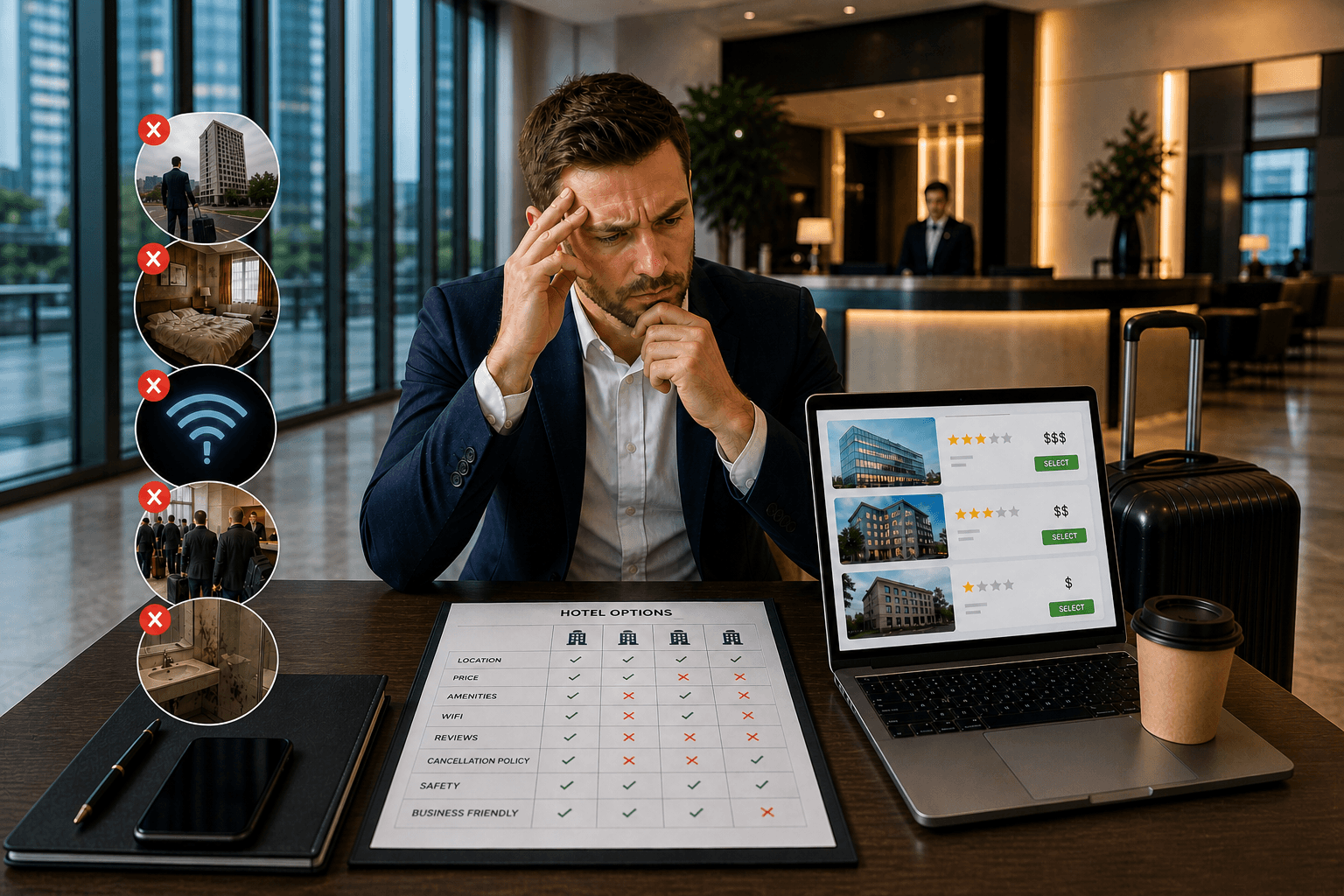

In today’s fast-paced corporate environment, hotel selection is no longer a routine booking task—it’s a strategic decision that directly impacts employee productivity, cost efficiency, and overall travel experience. Despite this, many organizations continue to make avoidable mistakes when choosing accommodations for business travel. Understanding these pitfalls can help companies streamline operations, enhance traveler satisfaction, and optimize budgets.
1. Prioritizing Price Over Value
One of the most common mistakes companies make is selecting hotels based solely on the lowest price. While cost control is important, cheaper options often come with hidden trade-offs such as poor location, lack of essential amenities, or unreliable service. This can lead to reduced productivity and increased indirect costs like transportation or missed meetings.
A better approach is to evaluate overall value—including location, facilities, connectivity, and business-friendly services—rather than focusing only on nightly rates.
2. Ignoring Location Convenience
Choosing a hotel far from meeting venues, airports, or business districts may seem economical initially, but it can result in time loss, higher commute costs, and employee fatigue. Location plays a crucial role in ensuring efficiency during business travel.
Hotels situated near corporate hubs or with easy access to transport networks can significantly enhance travel efficiency and reduce stress for employees.
3. Overlooking Business Amenities
Many companies fail to check whether a hotel offers essential business amenities such as high-speed Wi-Fi, meeting rooms, workspaces, and early check-in/late check-out options. Lack of these facilities can disrupt work schedules and create unnecessary inconvenience.
For effective business travel planning, companies should ensure that hotels are equipped with all necessary corporate-friendly features.
4. Lack of Centralized Booking Policy
Without a structured booking policy, employees may choose hotels inconsistently, leading to budget overruns and lack of standardization. This also makes it difficult to track expenses and maintain compliance.
Implementing a centralized booking system through reliable corporate travel booking services ensures consistency, better negotiation power, and improved cost control.
5. Ignoring Traveler Safety & Reviews
Safety should always be a top priority. Companies often overlook hotel safety standards, hygiene practices, and customer reviews. In today’s environment, especially post-pandemic, health and safety protocols are non-negotiable.
Checking verified reviews and safety ratings helps organizations avoid reputational and operational risks.
6. Not Leveraging Corporate Partnerships
Many organizations miss out on negotiated rates and exclusive benefits by not partnering with professional travel providers. Strategic partnerships can unlock better pricing, priority bookings, and added perks such as complimentary upgrades or flexible cancellation policies.
7. Poor Expense Management Integration
Hotel bookings that are not integrated with expense management systems can create challenges in tracking, reporting, and auditing travel expenses. This leads to inefficiencies and potential financial discrepancies.
Companies should opt for solutions that seamlessly integrate booking and expense tracking for better financial visibility.
8. Ignoring Employee Preferences
Employee comfort directly impacts performance. Ignoring traveler preferences—such as preferred hotel chains, room types, or amenities—can reduce satisfaction and productivity.
A balanced approach that considers both company policies and employee comfort leads to better outcomes.
Conclusion
Avoiding these hotel selection mistakes is essential for building a robust and efficient travel strategy. Companies that adopt a structured, value-driven approach can significantly improve travel experiences while maintaining cost control. Partnering with experts in corporate travel management india can further streamline processes and ensure smarter decision-making.
Ultimately, choosing the right accommodation is a critical component of successful Business travel in India, where efficiency, comfort, and cost optimization must go hand in hand.